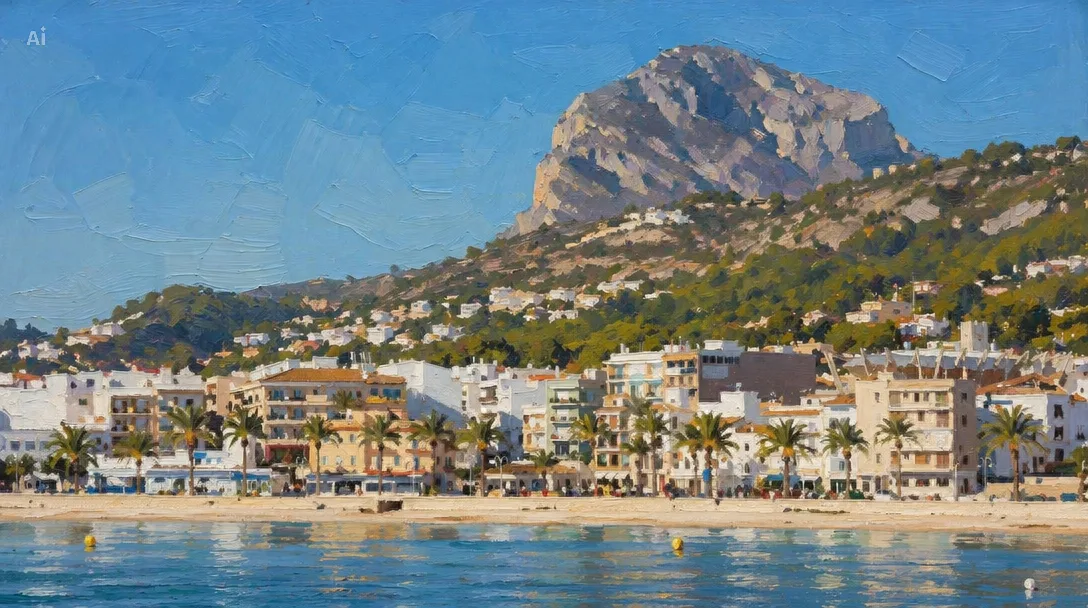
Costa Blanca Norte
Jávea
A broad coastal lifestyle anchored by the Montgó mountain
Jávea (Xàbia in Valencian) is widely considered one of the most desirable towns on the Costa Blanca North. Sheltered between the Cap de Sant Antoni to the north and Cap de la Nau to the south, it is a town defined by its physical breadth and its strong international community. Unlike more compact coastal villages, Jávea operates as three distinct centres — the historic Old Town, the working Port, and the sandy Arenal beach — surrounded by expansive, undulating residential zones. It is a mature, stable, and highly sought-after market, where buyers are driven by quality of life, the microclimate created by the Montgó mountain, and a sophisticated, year-round international atmosphere.
01 / Overview
Quick snapshot
Three distinct town areas, sandy beaches, rocky coves, and the Montgó backdrop
- Typical homes
- Large traditional and modern villas, Port and Arenal apartments, Old Town houses
- Key draw
- Three distinct town areas, sandy beaches, rocky coves, and the Montgó backdrop
- Nearest airport
- Alicante–Elche (approx. 1 hour 15 min) or Valencia (approx. 1 hour 20 min)
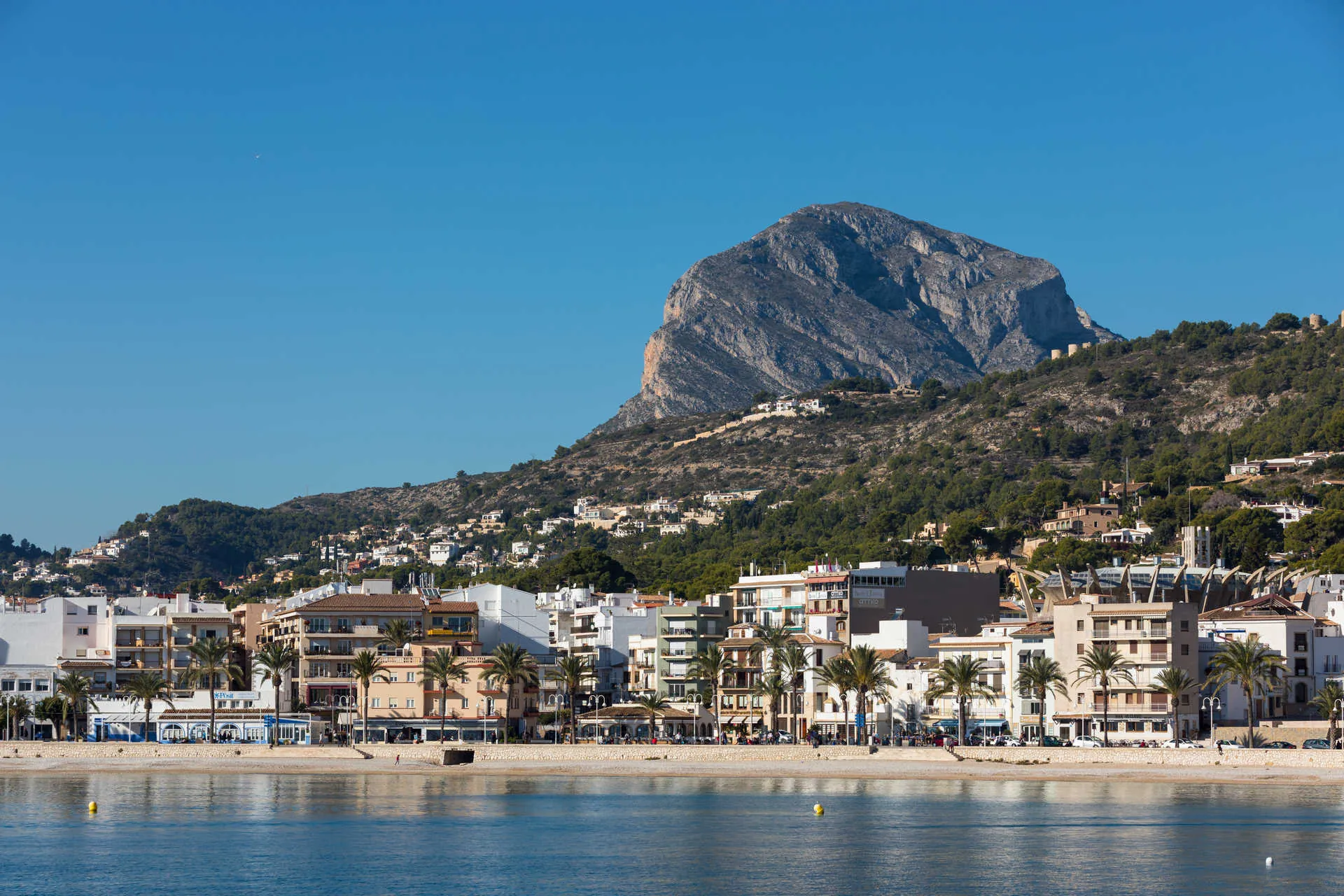
Jávea feels expansive and affluent. Because it is spread out over a large bay and up into the surrounding hills, it lacks the dense, crowded feeling of some other coastal resorts. The atmosphere shifts entirely depending on where you stand. The Old Town is a labyrinth of narrow streets, Tosca stone facades, and gothic architecture, offering a quiet, authentic Spanish rhythm. A few kilometres away, the Port feels more dynamic — a working fishing harbour surrounded by a pebble beach, elegant tapas bars, and a strong, year-round local community. Further south, the Arenal is the tourist hub, defined by a wide, crescent-shaped sandy beach, bustling promenades, and chic summer beach clubs.
Surrounding these three centres is a vast residential hinterland. Winding roads lined with dry-stone walls lead through pine forests to villas set on large plots, offering a lifestyle that feels deeply Mediterranean, private, and rooted in nature.
02 / The draw
Why this area?
Three distinct lifestyle centres within one municipality: Old Town, Port, and Arenal.
A highly protective microclimate, shielded from northern winds by the 753-metre Montgó massif.
A 20-kilometre coastline offering sandy beaches (Arenal) and spectacular rocky coves (Granadella, Portitxol).
Excellent international schools (e.g., Xàbia International College), making it a top choice for relocating families.
Strict zoning and height restrictions that have prevented high-rise development, preserving the town's character.
03 / Buyer fit
Who it suits
- Families
- Arguably the best location on the coast for international families, thanks to excellent schools, safe beaches, and a strong network of expatriate parents.
- Full-time relocation buyers
- The sheer size of the town and its robust year-round community mean you never feel isolated in winter.
- Affluent second-home buyers
- Very strong demand for lock-up-and-leave luxury villas in the hills or premium apartments in the Port.
- Nature and water sports enthusiasts
- Between the Montgó Natural Park hiking trails and the marine reserves for diving, the outdoor lifestyle is exceptional.
- Walkability seekers
- If you buy in the Port or Old Town, walkability is excellent. If you buy a villa in the hills, a car is absolutely essential.
04 / Property
Property snapshot
Jávea is primarily a villa market, supported by strong apartment sectors in the Port and Arenal. The zoning laws here demand larger minimum plot sizes in many areas (often 1,000m² to 1,500m²), resulting in a lower-density, greener environment than neighbouring towns. The architecture is a mix of the traditional — white walls, terracotta roofs, and the distinctive honey-coloured Tosca stone arches — and ultra-modern, flat-roofed luxury builds, particularly on the sea-facing cliffs of Cap de la Nau. The market is characterised by stability, with demand from Northern European buyers remaining robust. Because the town tightly controls new development, supply is limited, keeping resale values strong and driving a busy market for renovation projects.
The Port (Aduanas de la Mar)
A highly desirable area combining traditional maritime life with modern convenience. It features a pebble beach (La Grava), excellent restaurants, and a very active year-round community. Properties here are mainly apartments and traditional townhouses, highly sought after by those who want to walk everywhere.
The Arenal
The commercial and tourist centre, defined by the sandy Arenal beach and its lively promenade. Property here is heavily apartment-based and commands high rental yields. It is vibrant and noisy in summer, but much quieter in winter.
The Old Town (Centro Histórico)
Set back from the sea, this area offers traditional townhouses and apartments. It appeals to buyers wanting cultural authenticity, local markets, and a slower pace of life, often at a slightly lower price point than the Port.
Montgó (Partida Tosal)
The expansive residential slopes on the southern face of the Montgó mountain. Villas here are almost universally south-facing, sitting on large, flat plots (typically 1,500m²) and offering incredible winter sun and protection from northern winds.
Cap de la Nau and Balcón al Mar
The elevated, pine-clad headlands stretching south. This area is famous for dramatic cliffside villas and access to hidden coves like Granadella and Ambolo. It feels more remote and holiday-focused, offering some of the most spectacular sea views in the region.
05 / Daily life
Lifestyle and daily life
Beaches & seafront
Jávea offers incredible variety. The Arenal provides safe, shallow sand perfect for children. The Port offers the sophisticated pebble beach of La Grava. Further south, the coastline fractures into some of Spain's most famous rocky coves — the breathtaking Cala de la Granadella and Cala Portitxol — ideal for snorkelling and kayaking.
Dining & cafés
The culinary scene is exceptional. The Old Town provides traditional Valencian rice dishes and tapas. The Port is famous for fresh seafood straight from the fish market (La Lonja). The Arenal and the coastal road heading south are lined with trendy beach clubs and international fine dining.
Sport, nature & outdoors
The Montgó Natural Park is a daily backdrop for hikers and trail runners. The Cap de Sant Antoni marine reserve offers world-class scuba diving. Golfers have the Club de Golf Jávea (9 holes) and the nearby 27-hole La Sella course.
Schools & family life
Jávea stands out for its educational infrastructure. Xàbia International College (XIC) offers the British curriculum for ages 2 to 18, while the Waldorf El Montgó offers alternative holistic education — making the town a magnet for professional expatriate families.
Living in Jávea requires understanding its geography. If you live in a villa in Balcón al Mar or the Montgó, you must drive for every errand, school run, or dinner out. If you live in the Port or Old Town, you can live a highly pedestrianized lifestyle. Because it is located on a peninsula, Jávea does not have a train station or immediate AP-7 highway access. The drive to the motorway takes about 15 minutes, meaning the journey to either airport takes slightly over an hour. However, this slight geographical isolation is what has protected Jávea from overdevelopment. It remains a deeply functional, year-round town, with high-quality supermarkets, medical centres, and services that do not shut down when the summer ends.
Jávea sits roughly equidistant between Alicante and Valencia. Geographically and culturally, it marks the point where the Costa Blanca starts to feel slightly greener and more undulating. Compared to Calpe, Jávea is less vertical, less commercial, and more spread out. Compared to Moraira, it is larger, offering more variety in its beaches and town centres. It is a town that offers scale without losing its soul, making it arguably the most complete destination on the northern Costa Blanca.
06 / Market
Market angle and buyer insight
Jávea is a mature, premium market. It is not a place for speculative, high-yield, short-term investing — it is a lifestyle investment destination. Buyers choose Jávea to hold onto wealth while enjoying an exceptional standard of living. The demographic is affluent and increasingly international. Post-pandemic, the town has seen a surge in younger professionals and families relocating permanently, facilitated by remote work, which has shifted the town's energy from a retirement and summer holiday destination to a dynamic, year-round community. Properties that combine traditional Tosca stone features with modern interiors are currently highly prized, as are south-facing plots on the Montgó and frontline cliff properties.
Because Jávea is so geographically varied, the right advice is critical. A south-facing plot on the Montgó offers a completely different life — and winter climate — to a cliffside villa in Cap de la Nau or a penthouse in the Port. Elena Hills can help you define exactly which of Jávea's micro-areas aligns with your daily routine and property expectations.
07 / Questions
Frequently asked questions
- Is Jávea good for year-round living?
- Exceptional. The Port and Old Town remain active all year, supported by a large permanent population of locals and international residents.
- Is Jávea mainly for holiday homes or full-time residents?
- It has a very healthy balance of both. The Arenal and the southern coves lean toward holiday homes, while the Port, Old Town, and Montgó areas have high full-time occupancy.
- What kind of homes are most common here?
- Detached villas on large plots dominate the hills and outskirts, while the three town centres offer a mix of apartments and traditional townhouses.
- Is Jávea better for privacy or walkability?
- It depends entirely on the zone. The Port and Old Town offer excellent walkability. The villa zones (Montgó, Balcón al Mar) offer total privacy but require a car.
- How easy is it to reach the airport?
- It takes about 1 hour and 15 minutes to reach Alicante-Elche Airport, and slightly longer to Valencia Airport, due to the 15-minute drive inland to reach the AP-7 motorway.
- Does Jávea suit families?
- Yes, it is one of the premier locations on the coast for families, offering excellent international schools (like XIC), safe beaches, and a huge array of sports clubs.
- What is the difference between the Port and the Arenal?
- The Port is a working harbour with a pebble beach, feeling more traditional, year-round, and Spanish. The Arenal is a sandy beach surrounded by commercial tourist infrastructure, feeling much busier in summer and quieter in winter.
Elena Hills angle
Find your perfect lifestyle in Jávea
To understand which of Jávea's distinct lifestyles — the historic town, the bustling port, the sandy beach, or the quiet hills — is right for you, speak to Elena Hills.