Costa Blanca Norte
Calpe
Landmark views, broad beaches, and a practical coastal lifestyle
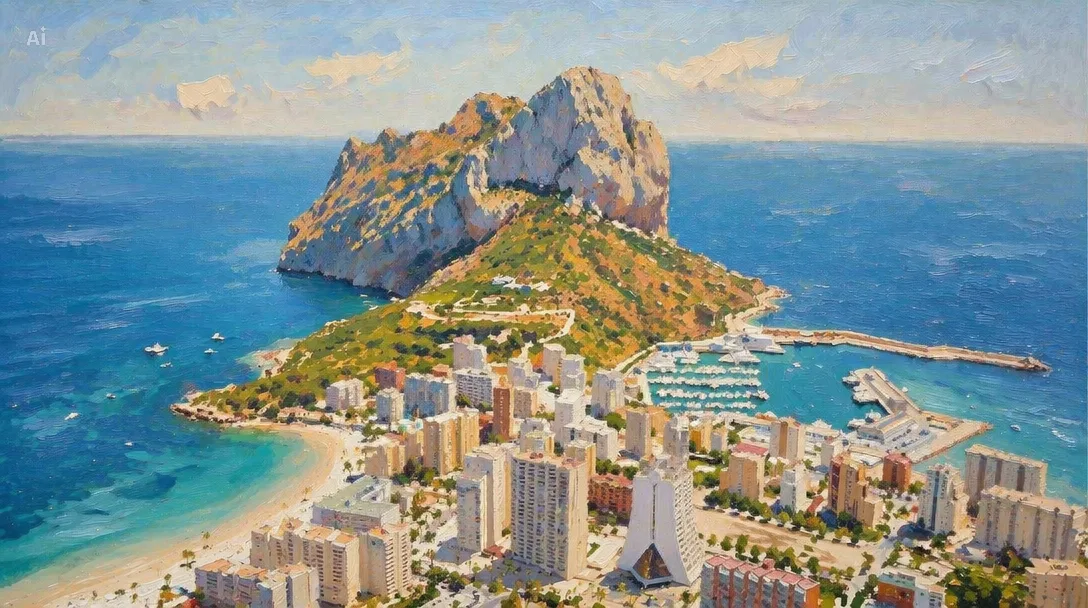
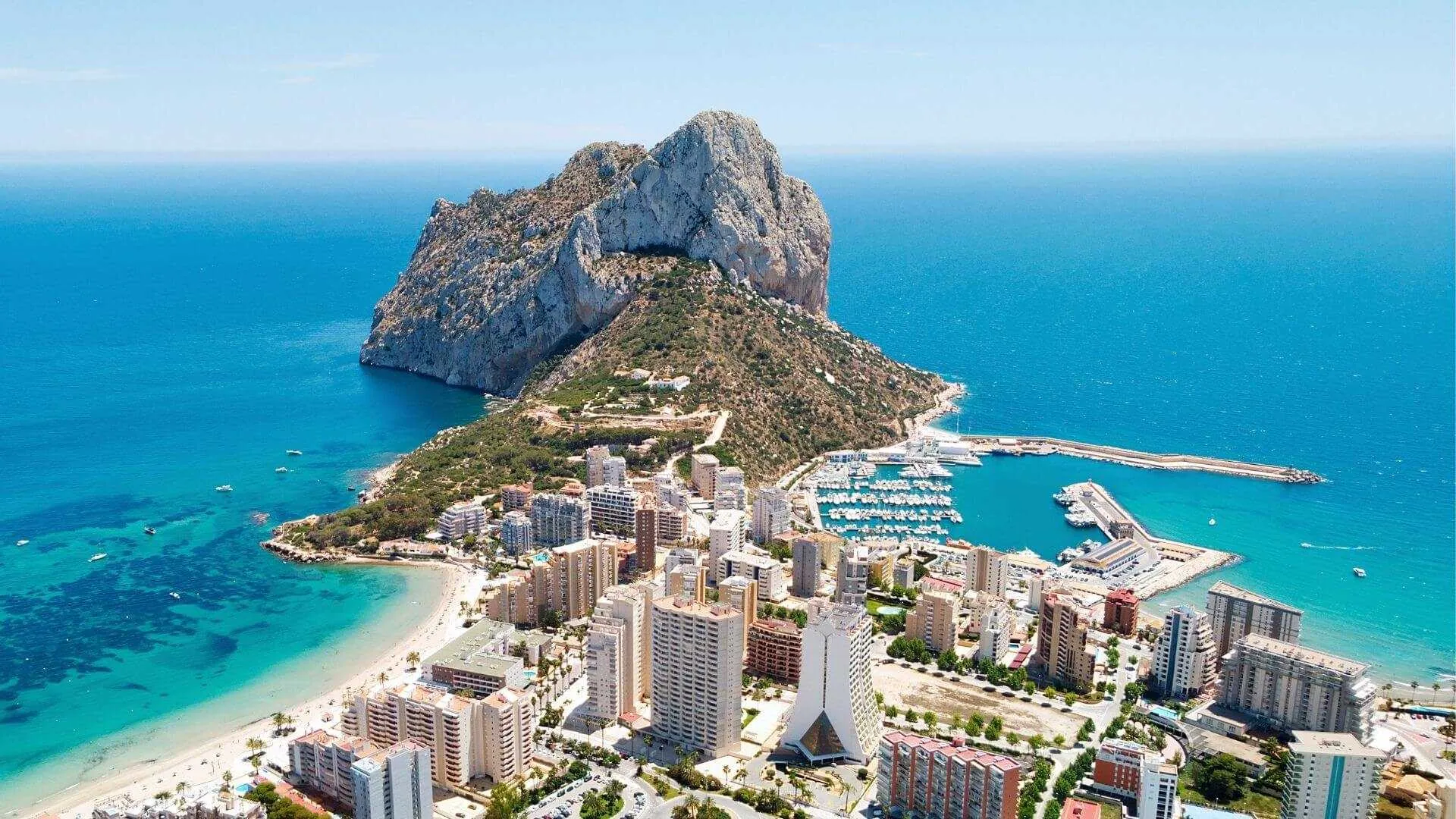
Calpe is visually defined by the Peñón de Ifach, the massive limestone rock that rises dramatically from the sea and splits the town's coastline in two. While the rock provides the scenery, the town itself provides a highly functional, active, and accessible coastal lifestyle. Unlike some of the more seasonal or purely villa-led enclaves of the Costa Blanca North, Calpe is a working coastal town — one of the most consistently popular locations for both holidays and full-time relocation.
01 / Overview
Quick snapshot
The twin sandy beaches, the Peñón de Ifach, and flat walkability
- Typical homes
- Frontline apartments, modern penthouses, established villas on the outskirts
- Key draw
- The twin sandy beaches, the Peñón de Ifach, and flat walkability
- Nearest airport
- Alicante–Elche, around 50 minutes
Calpe feels energetic and straightforward. It lacks the bohemian, artistic quiet of Altea's old town, but it compensates with sheer usability and scale. The seafront is undeniably resort-like, dominated by apartment buildings, busy promenades, and beachfront restaurants catering to a large international crowd.
Step back from the water, and Calpe reveals a more layered personality. The small, often-overlooked old town retains a traditional Spanish feel, while the inland residential zones and salt flats (Las Salinas) provide a quieter, more nature-focused backdrop. The town's defining characteristic is its convenience — you do not need to navigate steep hills for daily errands, and you do not need to leave town to find major services.
02 / The draw
Why this area?
Two of the best wide, sandy beaches on the Costa Blanca North: Arenal-Bol and La Fossa.
A flat, highly walkable town centre and promenade, ideal for all ages.
A strong, active international community that keeps the town alive through the winter.
Excellent daily infrastructure, including large supermarkets, health centres, and schools.
A wide range of property types, from entry-level apartments to luxury hillside villas.
03 / Buyer fit
Who it suits
- Full-time relocation buyers
- Excellent for those who want everything on their doorstep, from medical care to varied supermarkets and an active winter social scene.
- Second-home buyers
- Very strong, especially for apartment buyers who want a low-maintenance property they can lock and leave.
- Families
- Highly practical due to the flat terrain, safe beaches, access to schools, and general ease of movement.
- Retirees
- One of the top choices in the region because of the flat promenades, English-speaking services, and year-round activity.
- Investors
- A very solid market for holiday rentals, given the strong summer demand driven by the beaches and the Peñón.
04 / Property
Property snapshot
Calpe's property market is distinctly dual-natured. The coastal strip is heavily defined by high-rise apartments, ranging from older 1970s and 80s blocks that require modernization to brand-new, luxury frontline developments offering premium amenities. Behind the town and up into the surrounding hills, the market shifts entirely to detached villas. Many of the older villas in areas like Canuta or Maryvilla are being bought for renovation, while new-build modern villas are increasingly common on the available elevated plots. Prices generally dictate that the closer to the beach and the higher the floor, the more you pay.
Arenal-Bol and La Fossa (Levante)
These are the two main beach zones, separated by the Peñón de Ifach. They are dominated by apartment buildings, many with direct sea views. This area is perfect for buyers who want to step out of their building directly onto the promenade, prioritizing beach access and holiday energy over privacy.
The Port Area
Located near the base of the rock, this area offers a mix of apartments and a slightly more nautical, bustling feel, driven by the working fishing port and popular seafood restaurants. It is an excellent middle ground between the beaches and the rock.
Manzanera and Tosal
Situated slightly south of the main Arenal beach, this area is quieter and more picturesque, known for the architectural works of Ricardo Bofill (like the famous Muralla Roja). It offers apartments and villas with excellent sea views but less immediate tourist footfall.
Canuta, Maryvilla, and Oltamar
These are the established villa zones set back from the town or rising into the hills (like Oltamar, at the foot of the Oltà mountain). They offer more space, private pools, and often spectacular views down over the town and the rock, suited to buyers who want Calpe's convenience but prefer a detached home environment.
Las Salinas
The area surrounding the central salt lake is flatter and quieter, offering a mix of villas and low-rise developments. It provides a unique setting where flamingos can often be seen, acting as a buffer between the busy beaches and the inland residential zones.
05 / Daily life
Lifestyle and daily life
Beaches & seafront
This is Calpe's main draw. The Arenal-Bol and La Fossa beaches are broad, sandy, and well-maintained, lined with long promenades that are busy year-round. It is a classic Mediterranean beach lifestyle, easy and accessible.
Dining & cafés
The dining scene is broad and international. While there are excellent local seafood options near the port, much of the seafront caters to a pan-European palate. It is less about fine dining and more about relaxed, accessible, seafront meals.
Sport & outdoors
Beyond the water sports and beach activities, Calpe is a major hub for cycling. Professional teams and amateurs alike use the town as a winter training base. Hiking the Peñón de Ifach is a local rite of passage.
Shopping & everyday convenience
Calpe excels here. Unlike smaller coastal villages, it has multiple large supermarkets, hardware stores, and a bustling weekly market. You rarely need to leave Calpe for day-to-day administrative or shopping needs.
Calpe is designed for easy living. The flat topography of the town centre and beaches makes getting around simple, which is a major draw for older buyers or families with pushchairs. However, if you live in the villa zones like Oltamar, a car is necessary to reach the town. The N-332 road and the AP-7 highway are easily accessed, putting Alicante-Elche Airport at a comfortable 50-minute drive. While Calpe sees a massive influx of tourists in July and August, it does not shut down in winter. The large resident population ensures that supermarkets, medical centres, and many restaurants remain open all year.
Geographically, Calpe acts as a bridge. It sits north of the dramatic cliffs of Mascarat and Altea, and south of the more villa-heavy, undulating coastline of Benissa and Moraira. It is larger and more urban than Moraira, but less intense than Benidorm. If buyers find Altea too hilly or Benissa too quiet in the winter, Calpe often emerges as the perfect practical compromise, offering the scale of a real town alongside the aesthetic of a beach resort.
06 / Market
Market angle and buyer insight
Calpe represents the sensible, solid middle ground of the Costa Blanca North market. It lacks the ultra-exclusive price tags of Moraira or Altea Hills, making it more accessible to a broader range of buyers, yet it offers significantly better infrastructure and year-round life than many cheaper areas further south. The market has seen steady growth, with property prices reaching an average of over €4,100 per square metre by early 2026. The strongest demand remains for modernised or new-build apartments near the beaches, which command a premium for their rental yield potential, and for well-positioned villas with views of the Ifach rock.
Because Calpe's market is so varied — ranging from beachfront apartments to hillside villas — the right advice is crucial. Elena Hills can help you navigate the differences between the busy Levante beach zone, the quieter Manzanera coves, or the views from Oltamar, ensuring you find the specific micro-location that matches your intended lifestyle.
07 / Questions
Frequently asked questions
- Is Calpe good for year-round living?
- Yes, it is one of the best options on the coast. With around 25,000 permanent residents, supermarkets, schools, and health services remain fully operational throughout the winter.
- Is Calpe mainly for holiday homes or full-time residents?
- It has a very healthy mix of both. The seafront apartments are heavily skewed toward holiday use, while the town centre and villa zones house a large full-time population.
- What kind of homes are most common in Calpe?
- The seafront is dominated by apartments — both older blocks and new developments — while the surrounding areas like Maryvilla and Ortenbach are defined by detached villas.
- Is Calpe better for privacy or walkability?
- The town centre and beach areas are excellent for walkability. If you want privacy, you need to look at the villa zones on the outskirts, which will require a car.
- How easy is it to reach the airport?
- Very straightforward. The drive down the AP-7 to Alicante-Elche Airport takes approximately 50 minutes under normal traffic conditions.
- Does Calpe suit families?
- Yes. The flat beaches are family-friendly, and the town has sufficient schools and sports facilities to support full-time family relocation.
- How does Calpe compare with Moraira?
- Calpe is larger, busier, and more apartment-heavy with broader sandy beaches. Moraira is smaller, lower-rise, more expensive on average, and feels more exclusively like a villa town.
Elena Hills angle
Explore the beaches and hillside retreats of Calpe
To discover which side of Calpe best suits your plans — the vibrant seafront or a quieter hillside retreat — speak to Elena Hills to explore our curated selection of properties in this highly practical coastal town.